
Earl Lintels
Blind Bolts
Blind Bolts
Share
Couldn't load pickup availability
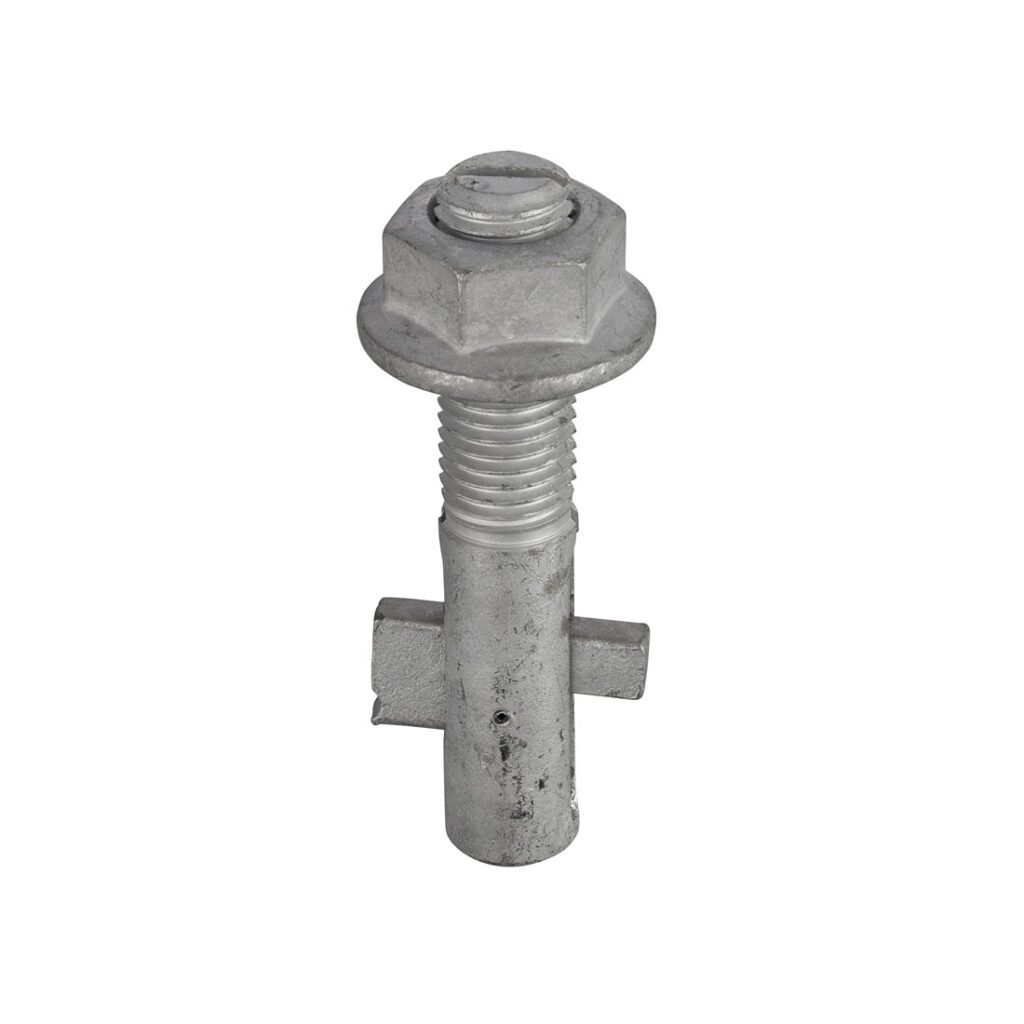
Galvanised Blind Bolts
Click here for datasheets
Blind Bolts provide a practical solution for creating structural steel connections where access is only available from one side. They are particularly suited to RHS, SHS, box sections, hollow profiles and girder cavities, avoiding the need to drill through the far face or gain access inside the steel section.
The Blind Bolt is inserted through correctly sized pre-drilled holes in the fixture and steel section. Its pivoting toggle is then deployed behind the steel before the nut is tightened. Tightening draws the toggle firmly against the inside face of the section, clamping the connected components together without requiring access to the rear.
Manufactured from property class 10.9 steel with a hot-dip galvanised finish, these Blind Bolts provide durable corrosion protection for a wide range of internal and external steelwork applications. Suitability for the required environment and design life should be confirmed against the project specification.
We stock three popular sizes:
- M12 × 70 mm – Requires a 13 mm hole and has a grip range of 12mm to 33mm
- M16 × 90 mm – Requires a 17 mm hole and has a grip range of 13mm to 43mm
- M20 × 110 mm – Requires a 22 mm hole and has a grip range of 21mm to 52mm
Features
- Designed for steelwork connections with access from one side only.
- Suitable for RHS, SHS, box sections, hollow profiles and girder cavities.
- Property class 10.9 steel construction.
- Hot-dip galvanised for long-term corrosion protection.
- Requires considerably smaller holes than many sleeve-type blind fixings.
- Installed using conventional hand tools and tightened to the specified torque.
- No access required to the inside or rear of the steel section.
- The standard Blind Bolt can be removed and reinstalled.
- Suitable for structural steelwork, handrails, balustrades and retrofit connections, subject to suitable connection design.
Blind bolts are widely used where access to the inside or rear of a steel section is impossible, providing a fast and reliable alternative to conventional nut-and-bolt fixings.
Hollo-Bolts vs Blind Bolts
Both Blind Bolts and Lindapter Hollo-Bolts provide a means of connecting steelwork where only one side of the steel section is accessible. However, they use different operating mechanisms and have different hole sizes, installation requirements and published resistance values.
Neither product is automatically suitable for every connection. The strength of the connected steel section, section wall thickness, edge distances, bolt spacing and applied loads must also be checked. The connection should therefore be designed or approved by a suitably qualified structural engineer.
Lindapter Hollo-Bolts
The Lindapter Hollo-Bolt uses a sleeve-and-cone expansion mechanism. As the central bolt is tightened, the cone is drawn into the slotted sleeve, causing the sleeve legs to expand behind the inner face of the hollow section and clamp the connected steelwork together.
Because the sleeve and cone must pass through the connection, Hollo-Bolts require relatively large holes compared with the nominal bolt size.
For example:
- An M12 Hollo-Bolt has a nominal clearance-hole diameter of 20 mm. For an HDG Hollo-Bolt, Lindapter recommends drilling to the upper tolerance of 21 mm.
- An M20 Hollo-Bolt has a nominal clearance-hole diameter of 33 mm. For an HDG Hollo-Bolt, Lindapter recommends drilling to the upper tolerance of 35 mm.
Lindapter also specifies a minimum outer-ply thickness of 8 mm for M16 and M20 Hollo-Bolts.
Blind Bolts
The standard Blind Bolt uses a pivoting toggle rather than an expanding sleeve. The bolt is inserted through the pre-drilled hole and the toggle is deployed behind the steel section. Tightening the nut then draws the toggle against the inside face, forming a secure clamped connection.
Blind Bolts generally require holes much closer to a standard bolt-clearance size:
- M12 Blind Bolt: 13 mm hole
- M16 Blind Bolt: 17 mm hole
- M20 Blind Bolt: 22 mm hole
This can make Blind Bolts particularly useful where hole size, available steel width or connection geometry limits the use of a larger sleeve-type fixing.